
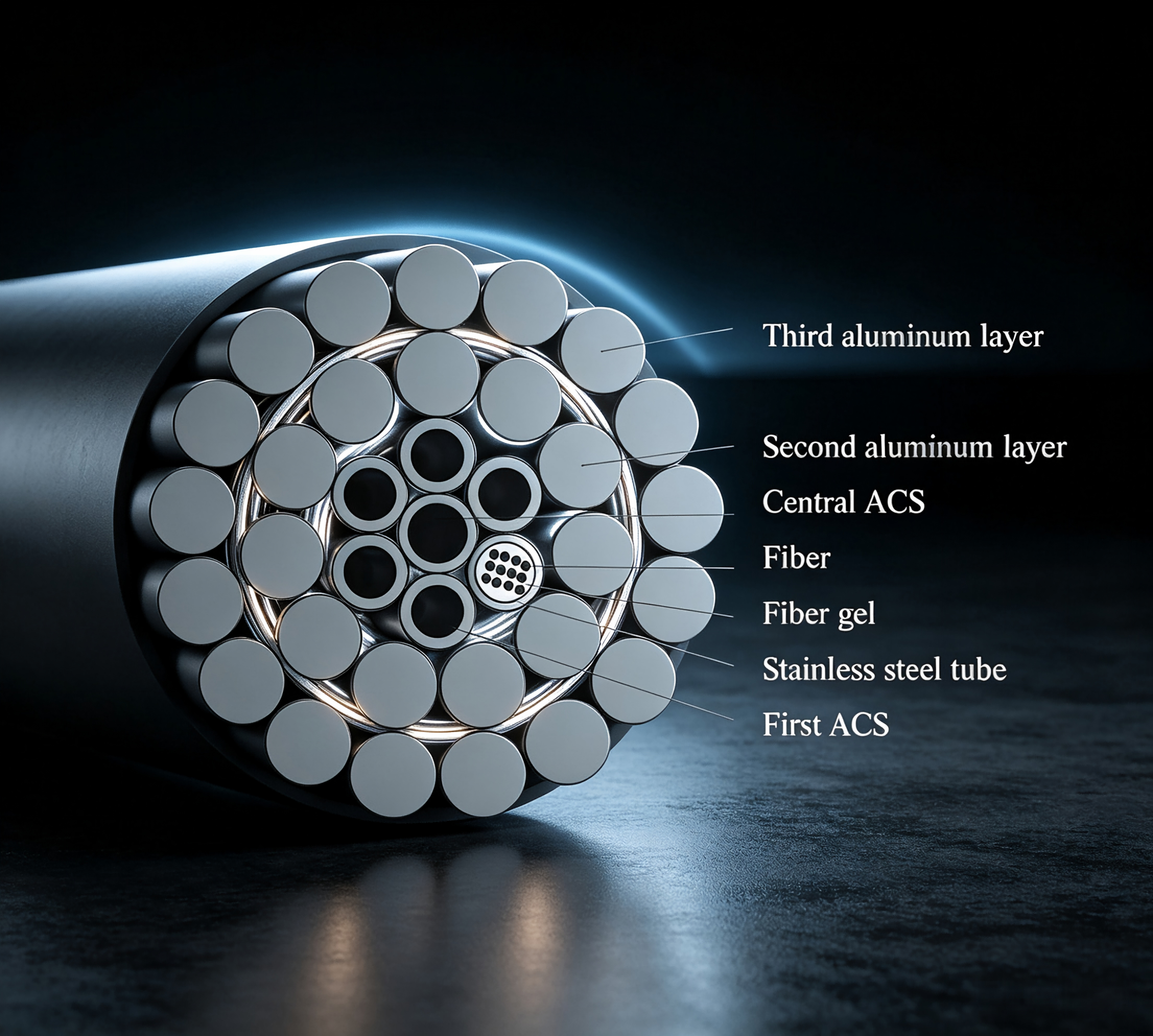
OPGW combines ground wire and optical communication functions. It is mainly used as communication cables for newly-built overhead high-voltage power systems of 35 kV, 110 kV, 220 kV, 500 kV, 750 kV and above. It can also replace existing ground wires in legacy overhead high-voltage power networks to add optical communication channels, carry short-circuit current and provide lightning protection. The cable structure is scientifically designed according to the user’s operating environment, and custom structural designs are available upon request.
Aerial
Optical communication circuits deployed on power transmission towers
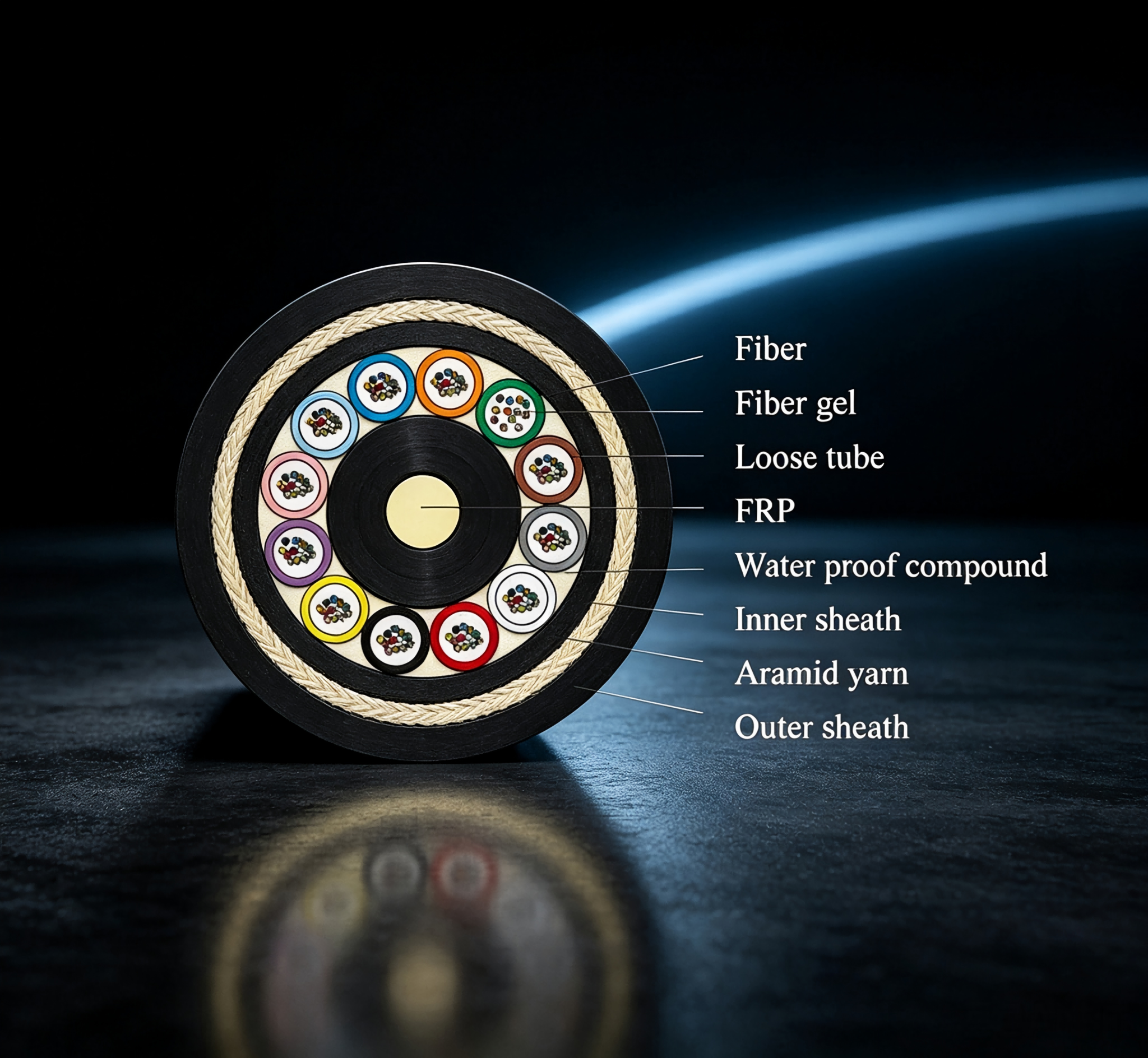
This cable adopts a loose-tube stranded structure. Optical fibers are placed inside loose tubes made of high-modulus polyester. Loose tubes and fillers are stranded around FRP to form a compact cable core filled with water-blocking gel. A PE inner sheath is extruded over the cable core, then two layers of aramid yarn are wrapped, and a PE or AT outer sheath is extruded in the final step.
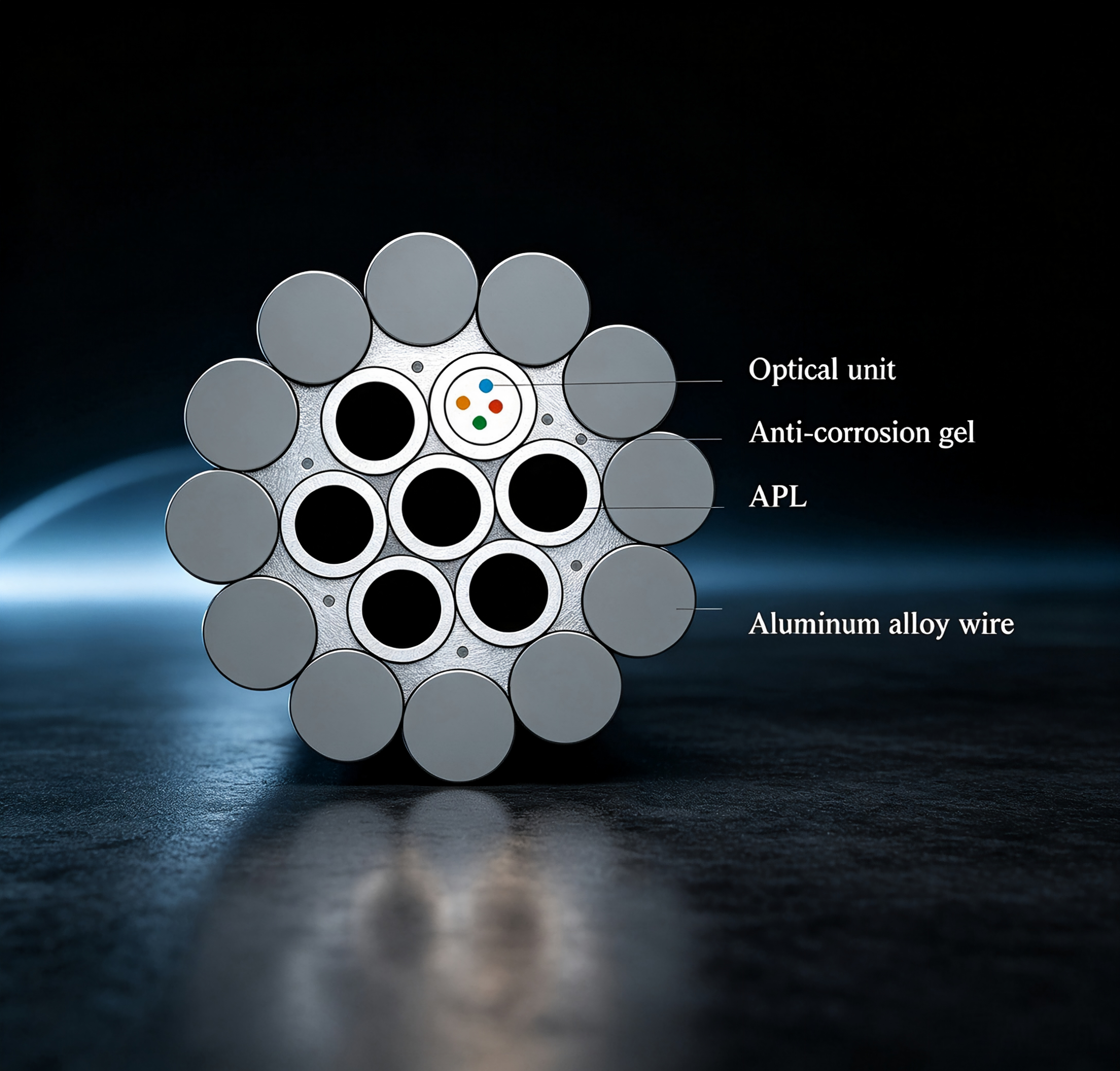
OPPC composite phase cable is a new type of special power cable. It embeds optical units inside phase conductors to realize dual functions of power transmission and optical communication. It is mainly applied for 110 kV and below power systems, such as suburban and rural distribution networks. In medium and low-voltage networks, especially 35 kV and below, ground wires may not be available, making OPGW installation impossible. Phase conductors are indispensable in all power grids. To satisfy the demands of power monitoring and fiber-optic networking, optical units are integrated into conventional phase conductors, forming this new composite optical fiber phase cable.
